DFIR & Threat Investigations
The latest dfir writeups curated from the CyberDefenders community — rendered right here on NivX so you can browse without leaving the platform.
PHP2Shell Detection and Incident Response: A Blue Team Guide
An HTTP 500 response doesn't necessarily mean a PHP2Shell attempt failed. A vulnerable PHP worker may execute attacker-controlled code before the application returns an err…
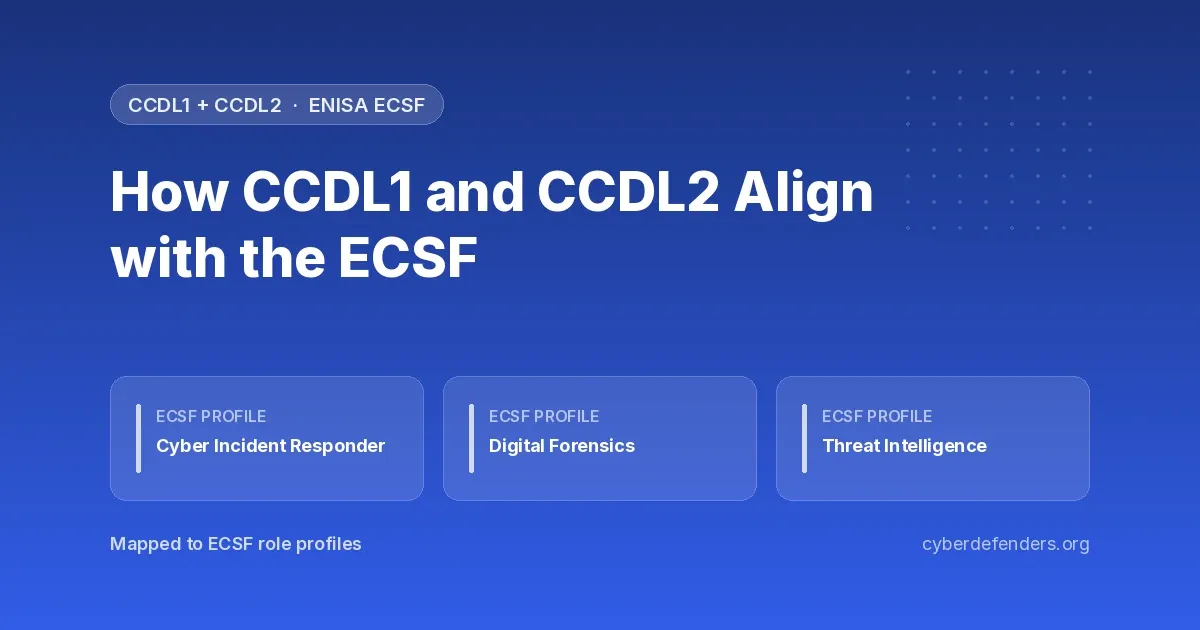
How CCDL1 and CCDL2 Align with ENISA's European Cybersecurity Skills Framework (ECSF)
CCDL1 and CCDL2 both map most strongly to two ECSF role profiles: Cyber Incident Responder and Digital Forensics Investigator. CCDL1 covers 81.6% of the Cyber Incident Responder pr…
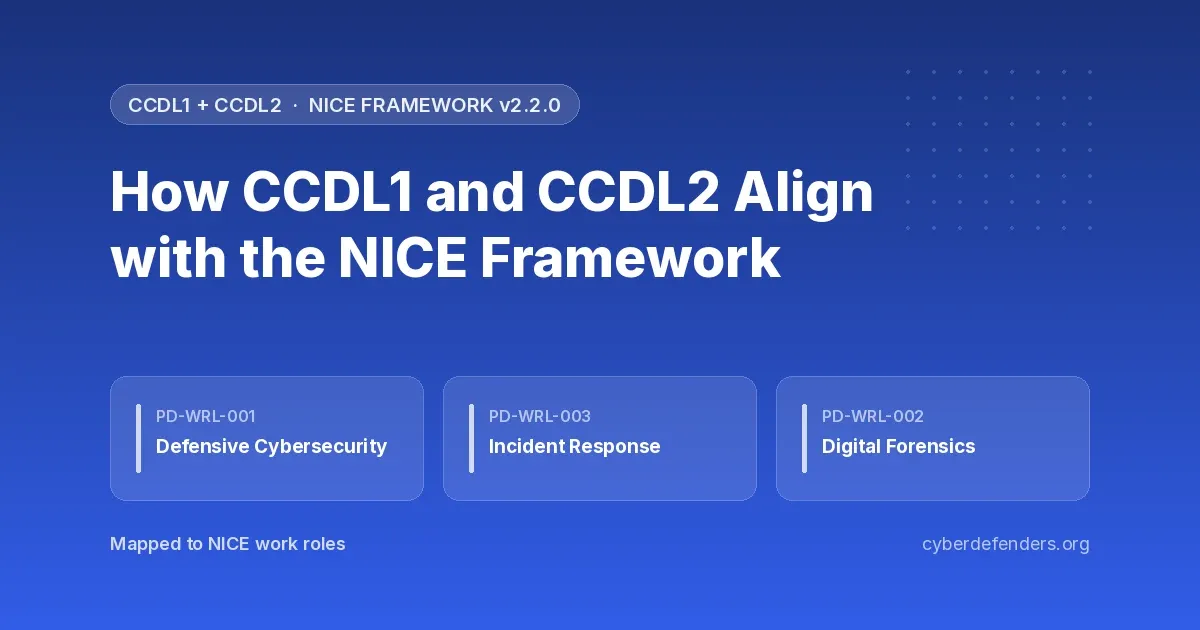
How CCDL1 and CCDL2 Align with the NICE Framework
CCDL1 lines up most closely with the NICE Framework's Defensive Cybersecurity and Incident Response work roles, the core of SOC analyst work. CCDL2 lines up most closely wi…
Enterprise Cyber Range: How Security Teams Train Against Real-World Attacks
An enterprise cyber range is an isolated environment where an organization's security team investigates simulated attacks built from the evidence, tools, and ambiguity of r…
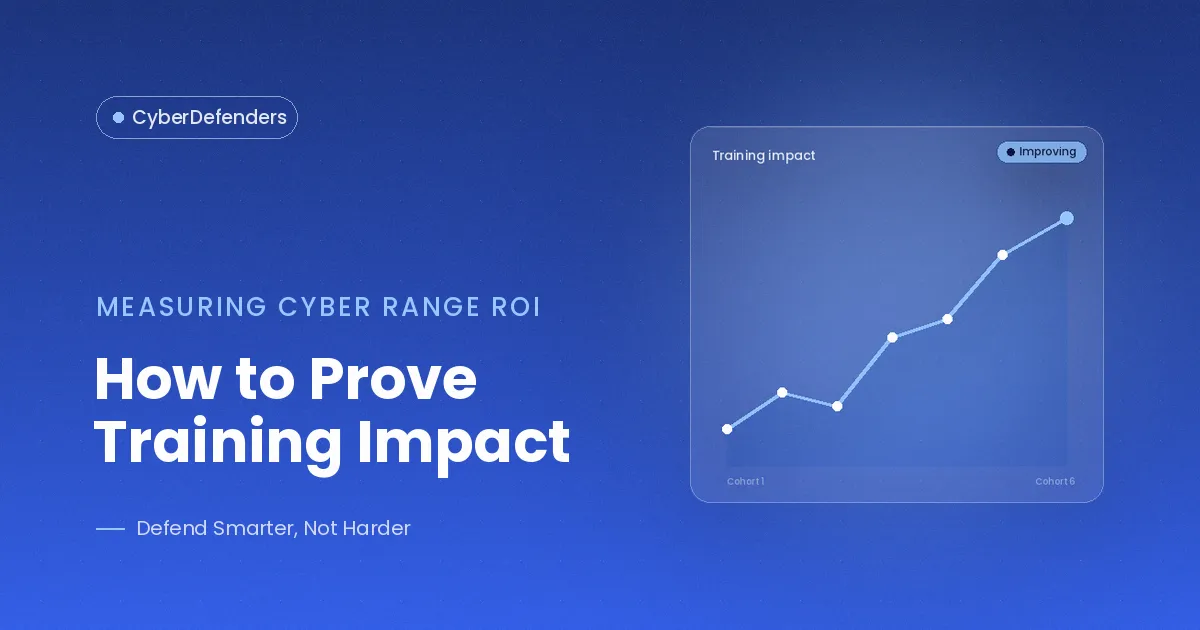
Measuring Cyber Range ROI: How to Prove Training Impact
Cyber range ROI is measured by comparing what a team can do before and after a training period, using scenario scores on realistic incidents rather than completion counts. The metr…
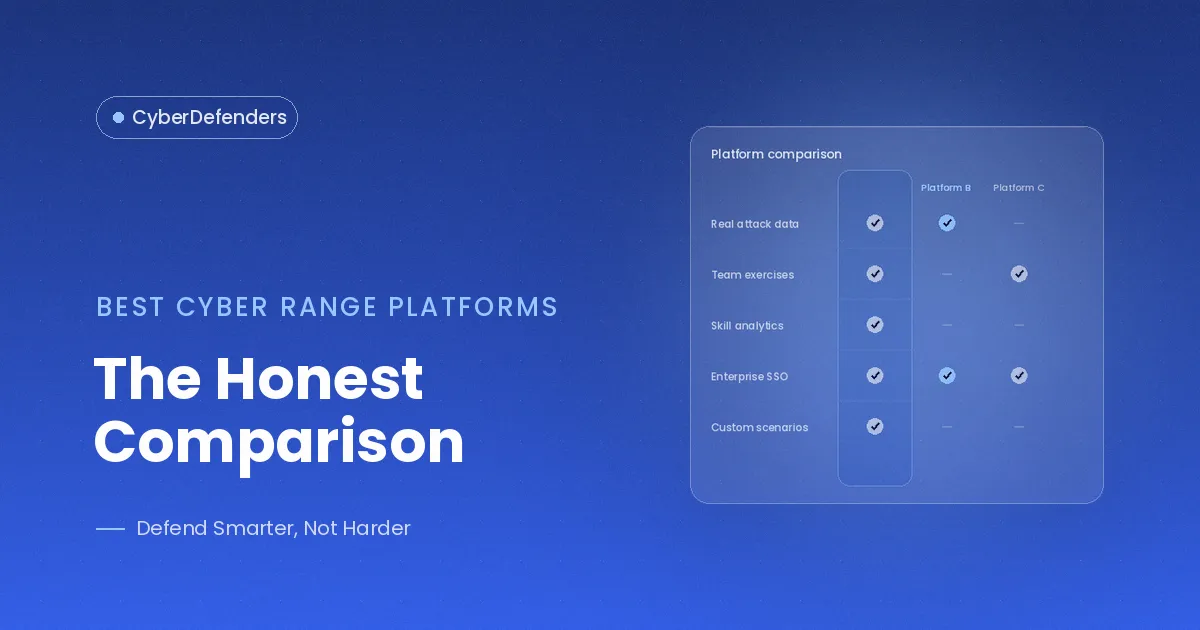
Best Cyber Range Platforms
The best cyber range platform depends on who is training and what they need to be able to do afterward. For SOC analysts and DFIR practitioners who need realistic investigations, C…
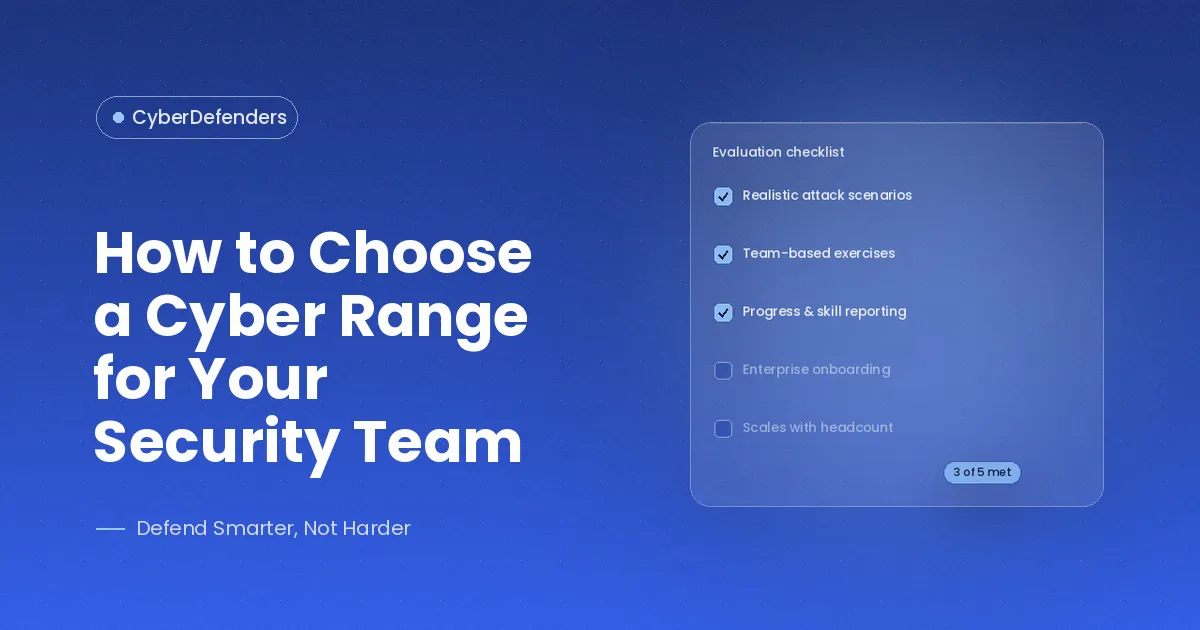
How to Choose a Cyber Range for Your Security Team
To choose a cyber range, define what your team must be able to do first, then judge vendors on six things: realism of evidence, hands-on execution with real tools, team capability,…
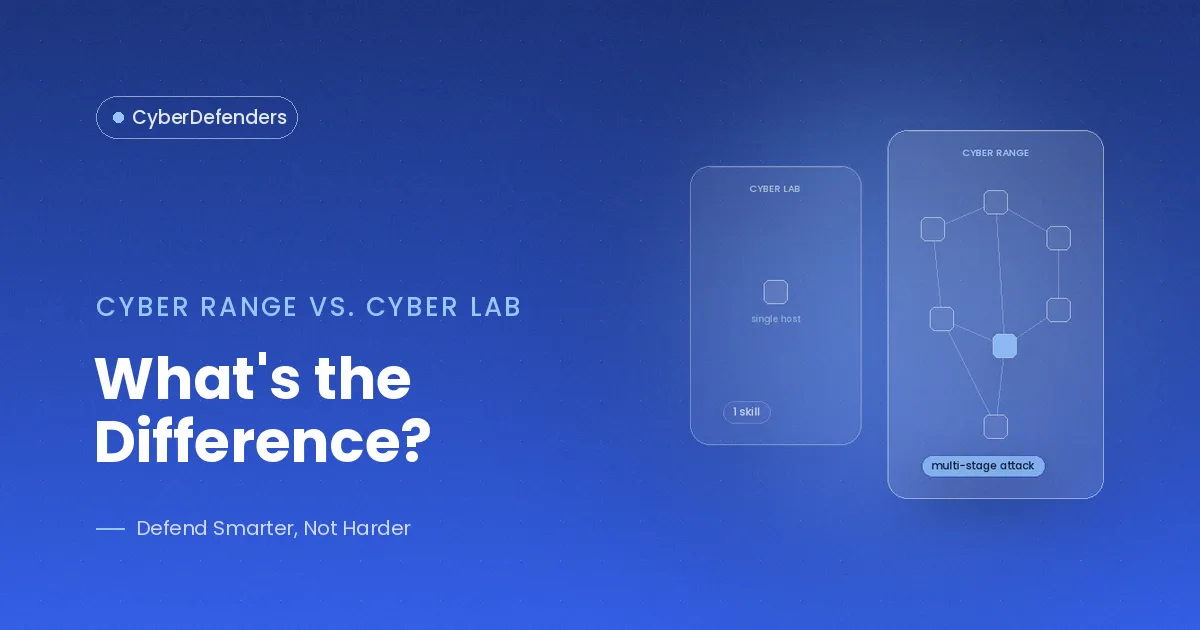
Cyber Range vs. Cyber Lab: What's the Difference?
A cyber lab is an isolated environment for practicing a specific tool or technique, with no adversary and no unfolding incident. A cyber range is a full simulated environment where…
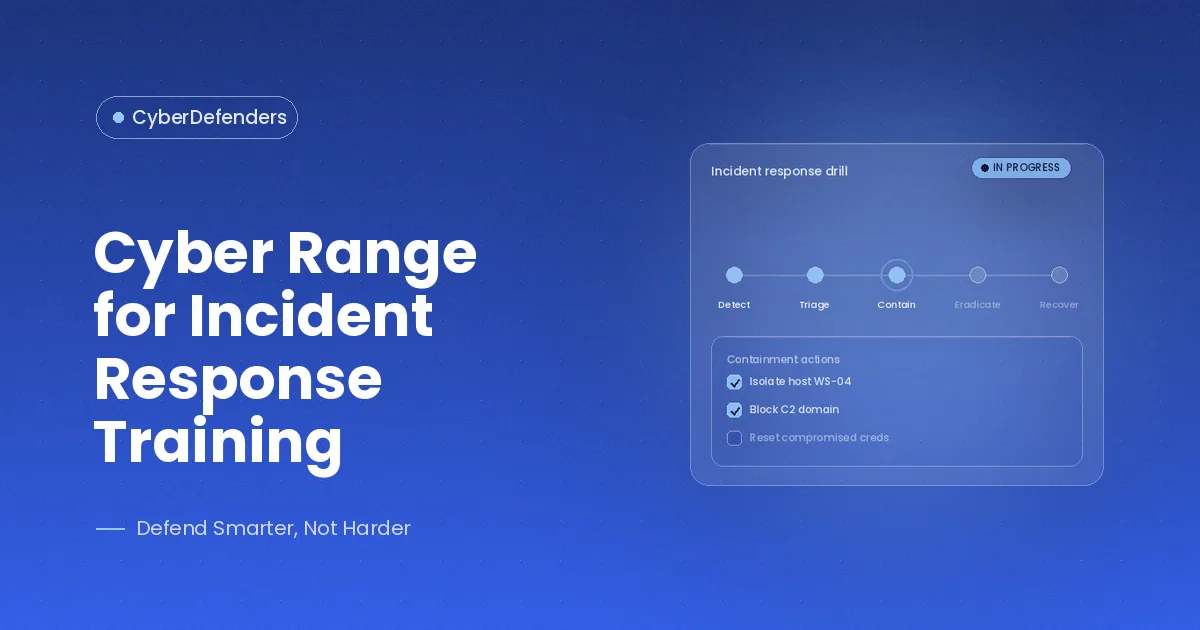
Cyber Range for Incident Response Training
Cyber range incident response training gives responders realistic intrusions to investigate, with real evidence and a known answer, so the team can practice the decisions the incid…
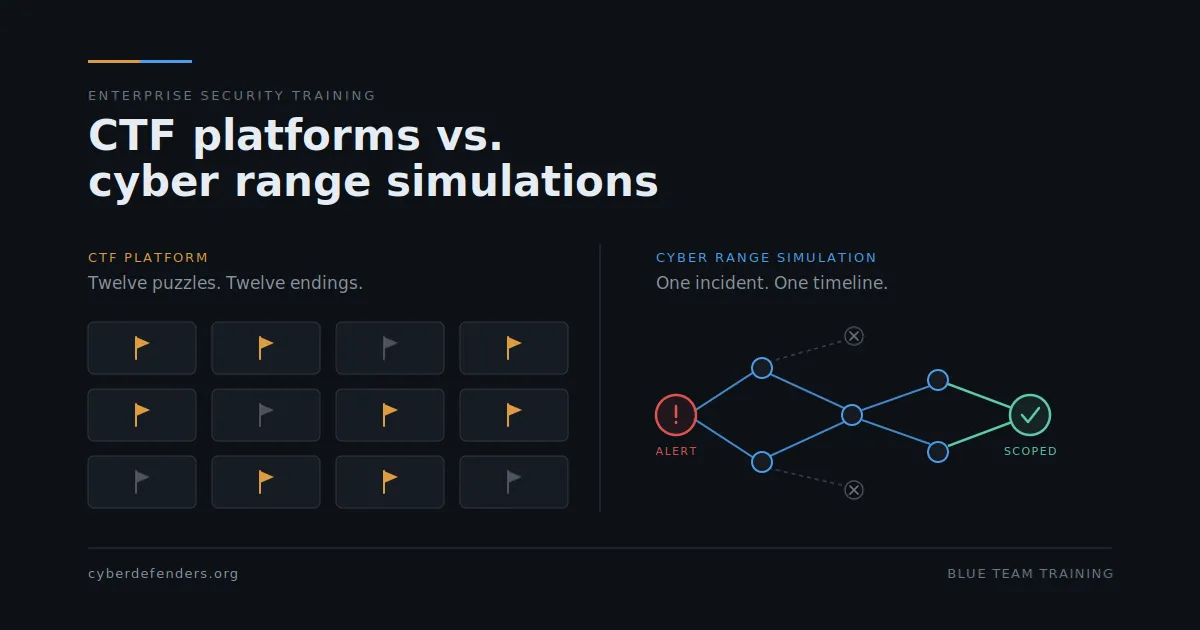
CTF vs. Cyber Range: What Each Format Actually Trains
A CTF scores players on self-contained puzzles with a known answer. A cyber range puts analysts inside a full simulated incident with realistic evidence and no guaranteed outcome…